

Common Good Fund
–
The Common Good Act (1491) stated that revenue from burgh properties and income from various levies were to be used for the common good of the town. Over the following centuries fixed or moveable assets were donated ‘on behoof of the community’ – most commonly to what were formerly known as burgh councils. The common good funds today comprise rents from land and buildings as well as moveable items such as paintings, books and artefacts. Local authorities – successors to the town councils that were abolished in 1975 – are responsible for administering common good assets, but do not own the funds.
Did all the land held by Town Councils pass into Common Good Funds?
In 1975, some Town Councils took the opportunity to pass the town’s common property into new Trusts to avoid having them taken over by the new authorities. St Andrews, for example, arranged for all the golf links in St Andrews that were part of their common lands to be transferred by Act of Parliament into the St Andrews Links Trust.
How many Common Good sites are there in St Andrews?
We have four Common Good sites in St Andrews that pay rent into the Common Good Fund:
- Town Hall
- Victory Memorial Hall
- Bruce Embankment (including car park)
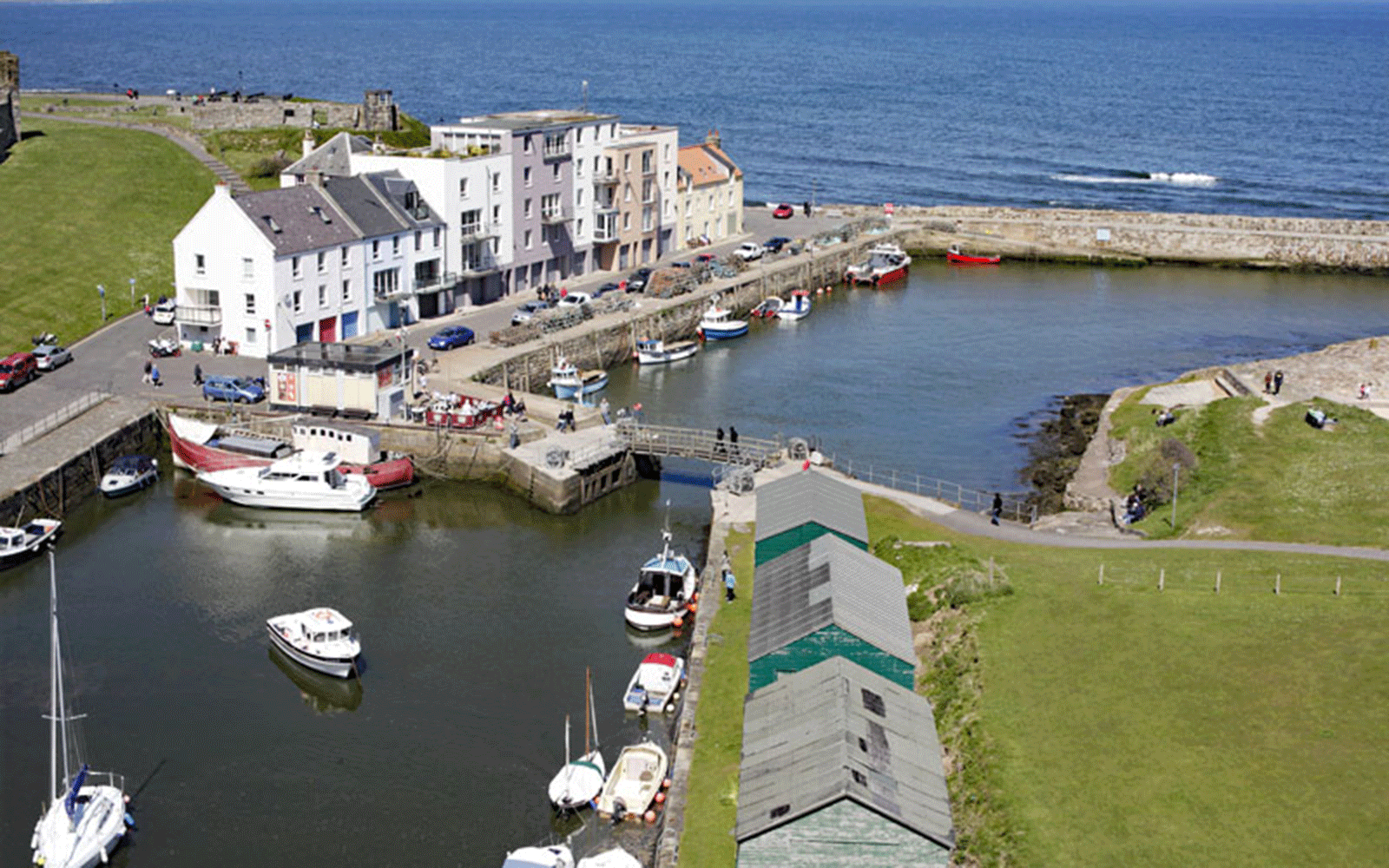
- the Fishermens’ stores at the harbour
Are there only fixed assets in the Common Good Fund?
No, there is also Moveable Common Good Property. These consist of such things as the Provost Chain and badge which was presented to St Andrews Town Council by the Marquess of Bute and is now used by the Provost of Fife. There are also lots of robes, hats and other official garments from the old Town Council. Finally, there are various sets of official weights and measures. Most of these are stored by Fife Council in Cupar. The Fife Council Register of Common Good Assets can be found here: Page 49 for St Andrews.
How much money does the Common Good Fund get each year?
The St Andrews Common Good Fund receives approximately £95,000 in revenue each year.
Who can apply for funds?
Any organisation or individual can apply for funds to support projects that will benefit the people of St Andrews.
Who decides what funds are allocated?
A council official under delegated powers can award funds up to £2,000. Fife Councillors award funds above £2,000.
What role does the Community Council have in the decision-making process?
The Community Council is a consultee. After they have assessed an application, they pass their opinion to the Fife Council official overseeing the application. As with planning applications, Fife Councillors can ignore the Community Council’s comments.


